
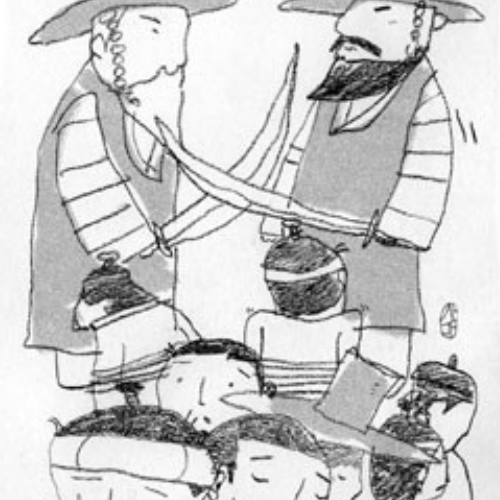
In ancient Korea, there was a very harsh rule called the “three generations’ punishment (삼족멸문).”
This rule meant that if one person committed a serious crime, not only would they be punished, but also their entire family, including parents, children, and even grandchildren. It was a way to remove a full three generations of a family line. Today, this rule is remembered as one of the strictest forms of justice in Korean history.
The practice began during the early Korean dynasties, but it became most well-known during the Joseon Dynasty which lasted from 1392 to 1897. Joseon society followed strict Confucian laws, and loyalty to the king was considered the highest duty. Due to this, crimes like treason were treated as extremely dangerous. If someone tried to harm the king, question the throne, or work with enemies, the government believed the problem must be removed from the entire family line to prevent future threats.
The punishment was carried out in different ways. Usually, the men in the family were executed, while women and children were sent into slavery or exile far away from home. Sometimes, families were banned from government jobs forever. In many cases, even distant relatives suffered. This made citizens very careful about their actions and also very afraid, because one mistake could destroy a whole family.
The three generations’ punishment rule slowly disappeared near the end of the Joseon Dynasty. With the arrival of modern laws and foreign influence in the late 1800s, Korea began changing its justice system and giving more room to humane punishments. The idea of punishing innocent family members was seen as unfair and too severe. By the early 20th century, the practice had completely ended.
Today, most Koreans view this rule as a cruel and unnecessary punishment. It is often discussed in historical dramas, books, or documentaries to show how strict life was in the past and how society has evolved. People now see it as an example of how power can be misused and how justice must protect individuals, not punish entire families.
This rule had a big impact on Korean history. It created fear and biased politics and influenced how people behaved in society out of fear. At the same time, its ending marked an important step toward fairness and modern human rights. Remembering it today helps people understand why justice must be balanced and why every person deserves to be judged by their own actions and not by the actions of their ancestors.
Like Loading...

Author
Damilola Jimmy
The ink drips smartly over here. Let me take you through the world of my imagination while riding on the letters😎 It's all fun in this corner.
Previous Post



Leave a comment