
Go call your mum. I'll wait.
Actually, keep reading, and then go call your mum.
Preferably in Korean.
May 8th in Korea is not Mother's Day. It's not Father's Day either. Korea looked at the Western tradition of splitting parental appreciation into two separate calendar events and decided: no. We're doing this together. In one day. For both.
어버이날 (Eobeoi-nal) translates simply as "Parents' Day." It was officially established in 1973, and unlike a lot of national holidays that get quietly reduced to a social media post and a prayer, this one is genuinely observed. Schools hold ceremonies. Children prepare carefully. Adults rearrange their schedules. This is not a Hallmark moment. This is something older and more deliberate.
The flower that carries the whole meaning
If you see a Korean person walking around on May 8th with a carnation pinned to their chest, now you know why.
The carnation — 카네이션 (kaneisyeon), is the symbol of the day. Children pin one onto their parents. But the colour is everything:
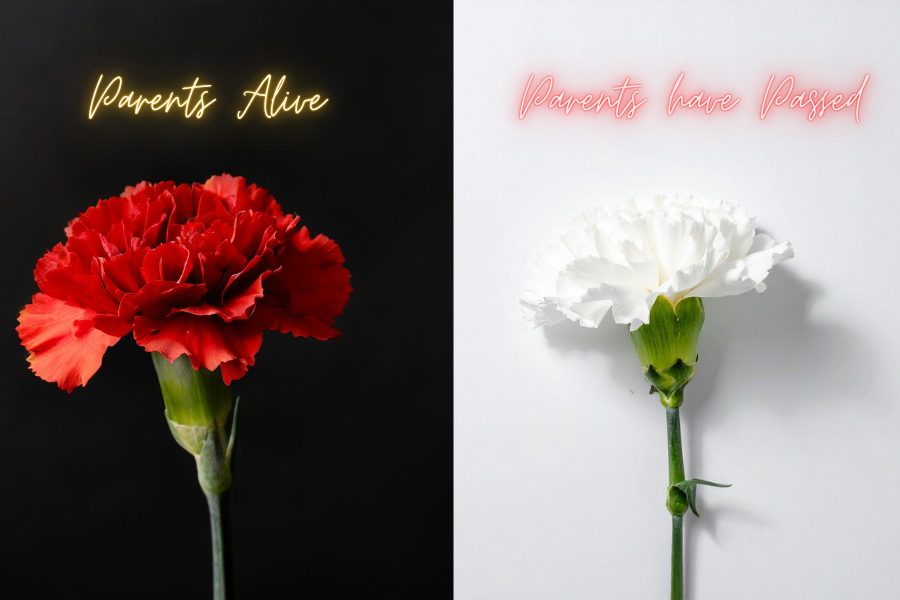
One flower. That much weight. Korean culture does not play around with symbolism. The carnation communicates what words might struggle to hold: both gratitude and grief, presence and absence, in the same gesture.
What Koreans actually do on this day
This is not a WhatsApp status or a prayer thing, as we are wont to do in many parts of Africa. The traditions of 어버이날 are specific, physical, and full of intention:
-
Pin a carnation: Red for a living parent. The act of pinning it is personal, close, and face-to-face.
-
Write a heartfelt letter: Not a DM. A letter. Handwritten. Koreans are not afraid of sincerity on paper.
-
Give 용돈 (yongdon): Pocket money, a financial gift that says: I see your sacrifice and I'm giving back.
-
Perform 세배 (sebae): A deep, formal bow. Your whole body is going low for the people who raised you. This isn't a performative activity; it's sincere and deeply felt.
Honestly, the bow deserves a segment of its own. 세배 is the full-body thank you. When a Korean child bows to their parents on this day, they are not following a procedure. They are saying something that their culture trusts the body to express better than words.
The words of the day
Here are the expressions Koreans reach for on 어버이날. Save these. Say them out loud. The pronunciation matters less than the fact that you tried.
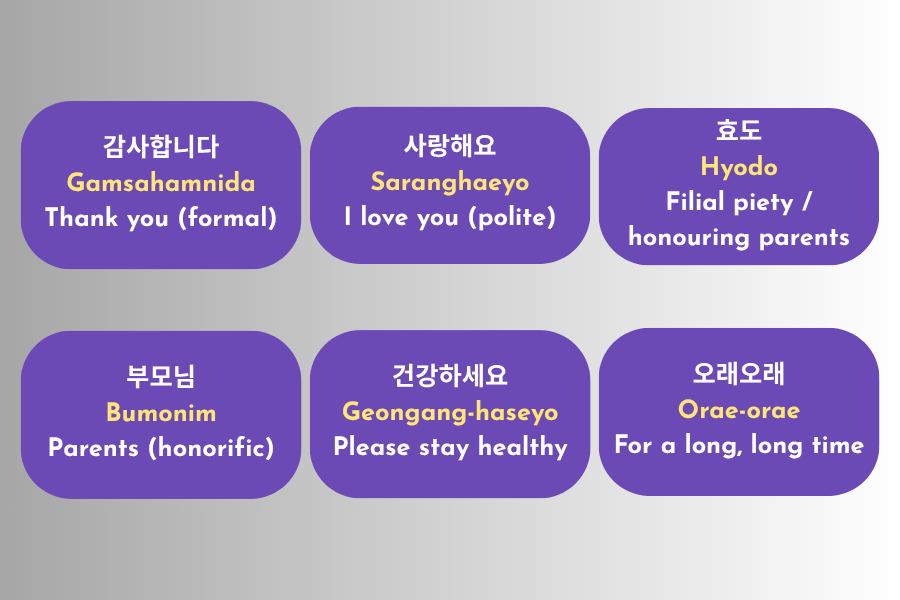
A note on 부모님: the suffix -님 elevates the word. It's the same honorific Koreans use for God, for deeply respected figures. Calling your parents 부모님 is not just a title. It is a grammatical act of reverence. The respect is built into the language itself.
The phrase that hits different
Of all the things Koreans say today, this one made the biggest impact on us. We have talked about it often since.
낳아주셔서 감사합니다
Naajusyeoseo gamsahamnida
"Thank you for giving birth to me."
Koreans say this. Out loud. To their parents' faces. On this day.
There is something about the specificity of it that undoes me. Not just thank you for everything, as it's so broad it can slide past you, but thank you for the act of bringing me into the world. For the particular cost of that. For choosing to do it and for surviving it.
This is not foreign to us in Africa
We kneel to greet our elders, not because someone told us to, but because something in us already knows it is right. We call our parents every weekend, whether we want to or not. We send money home before we send money to ourselves. We feel shame when we fall short in our duty to them — not because anyone is watching, but because we were built with the knowing.
효도 (Hyodo) does not have a clean English translation. Filial piety comes close, but it sounds like a legal term. The concept itself is warmer, more bodily, more lived-in than that phrase suggests.
But every African child knows exactly what Hyodo means. We do not have the word. We have the thing itself.
This is one of the parts of Korean culture that never felt foreign to me. The shape of it, the duty, the love, the debt you feel to parents who gave more than they had, that shape is ours too. We just call it different things in different languages.
And perhaps that is the deeper lesson of 어버이날. Not that Korea invented honouring parents. But that they made it a national practice, structured it, gave it language, gave it a flower, gave it a specific phrase to say out loud. There is something to learn in that. Not because we love our parents less, but because sometimes love needs a ritual to hold it properly.
어버이날 무렵 — at the time of Parents' Day
If you are reading this and your parents are alive, today is a good day. You do not need a carnation. You do not need to have studied Korean for five years. You just need the willingness to say something true and specific to someone who gave you the specific, unrepeatable fact of your life.
If you want to say it in Korean:
낳아주셔서 정말 감사합니다
Naajusyeoseo jeongmal gamsahamnida
"Thank you so much for giving birth to me."
Say it. To the phone screen if you have to. Slowly. Embarrassingly. It counts.
해피 어버이날 (Happy Parents' Day) to every parent being loved well today. And to everyone learning to love better in a second language: you are doing something braver than you know.
Like Loading...
Author


Leave a comment